
Painting the Wall Behind a Kitchen Stove: Ideas and Tips
· 6 min read
The wall behind a kitchen stove has to do two jobs at once: it should look good, and it has to cope with steam, grease and frequent cleaning. Paint can absolutely be part of the design, but the zone immediately around the burners needs a finish that suits the heat and splashes created by your cooking style.
For most Sri Lankan homes, the most practical approach is to use paint as the wider wall colour and add a tile, stone, stainless steel or tempered-glass splashback directly behind and beside the stove. That gives you the warmth and flexibility of a painted kitchen without asking ordinary wall paint to do a backsplash’s job.
Start with the zone, not the colour
Check how close the stove is to the wall
A freestanding cooker, a gas hob, an induction cooktop and a deep counter arrangement all create different conditions behind the stove. Notice where oil lands, how high steam rises and whether the wall is near an open flame. Follow the appliance manufacturer’s clearances and the hood installer’s requirements before choosing any finish.
Use a proper splashback in the high-splash area
Tiles, stone, stainless steel or heat-suitable tempered glass are usually easier to clean than painted plaster. Run the splashback across the width of the cooker and high enough to cover the area most affected by steam and splatter. Paint can begin above it or continue to either side for a more relaxed look.
Do not paint directly behind an open flame without checking the setup
Heat exposure, flame proximity and clearance rules differ by appliance. Do not treat standard wall paint as a heat shield. If the cooker instructions, installer or local supplier specifies a non-combustible finish, follow that advice and use an appropriate protective surface.
Six colour ideas for a stove wall
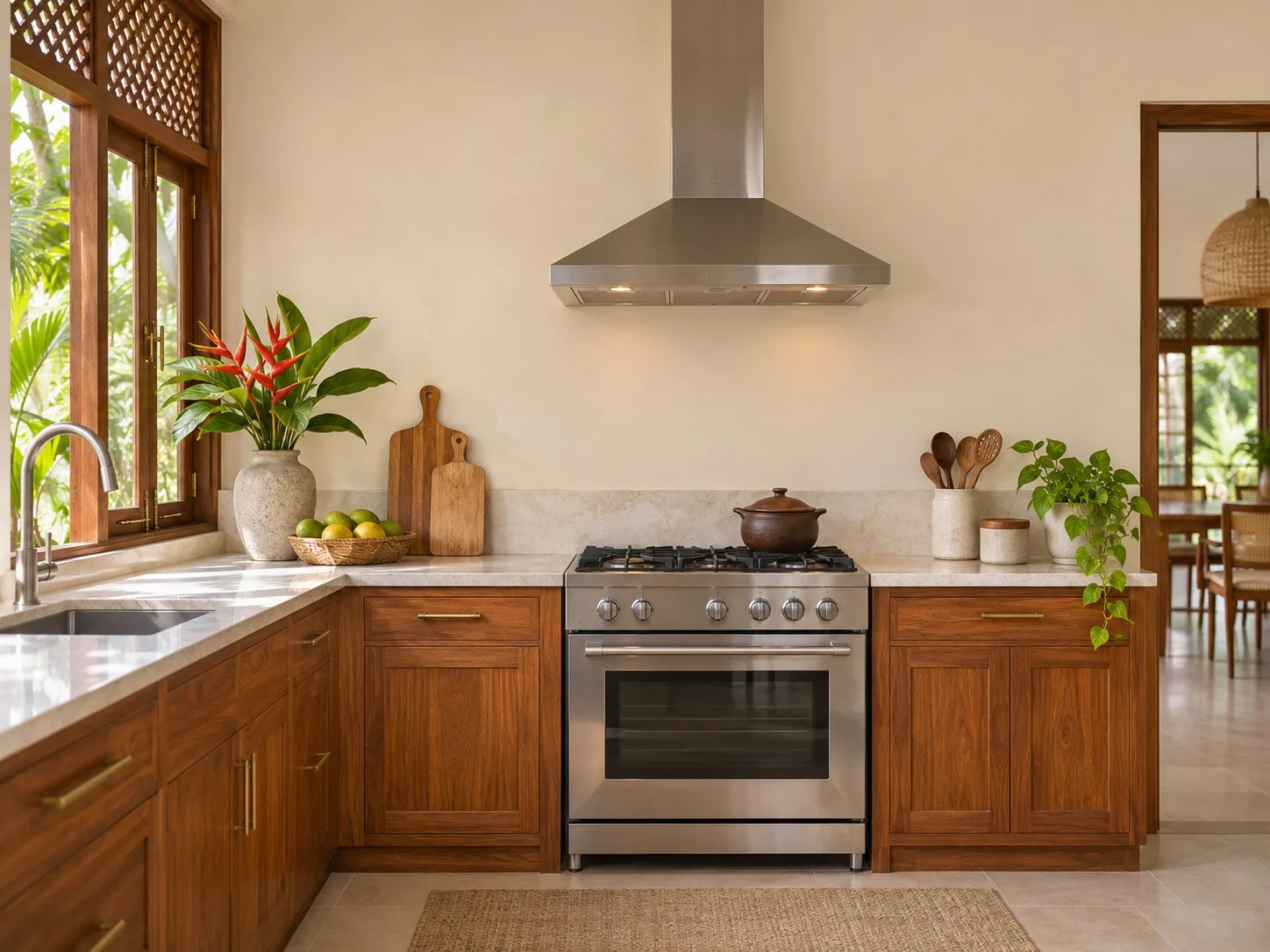
1. Warm off-white for a light, flexible kitchen
Warm off-white suits timber, rattan, brass and pale stone, and it reflects daylight well in a smaller kitchen. Choose an undertone that works with the floor and cabinets rather than a stark white that can feel clinical. A cream stone or pale tile splashback keeps the transition gentle.
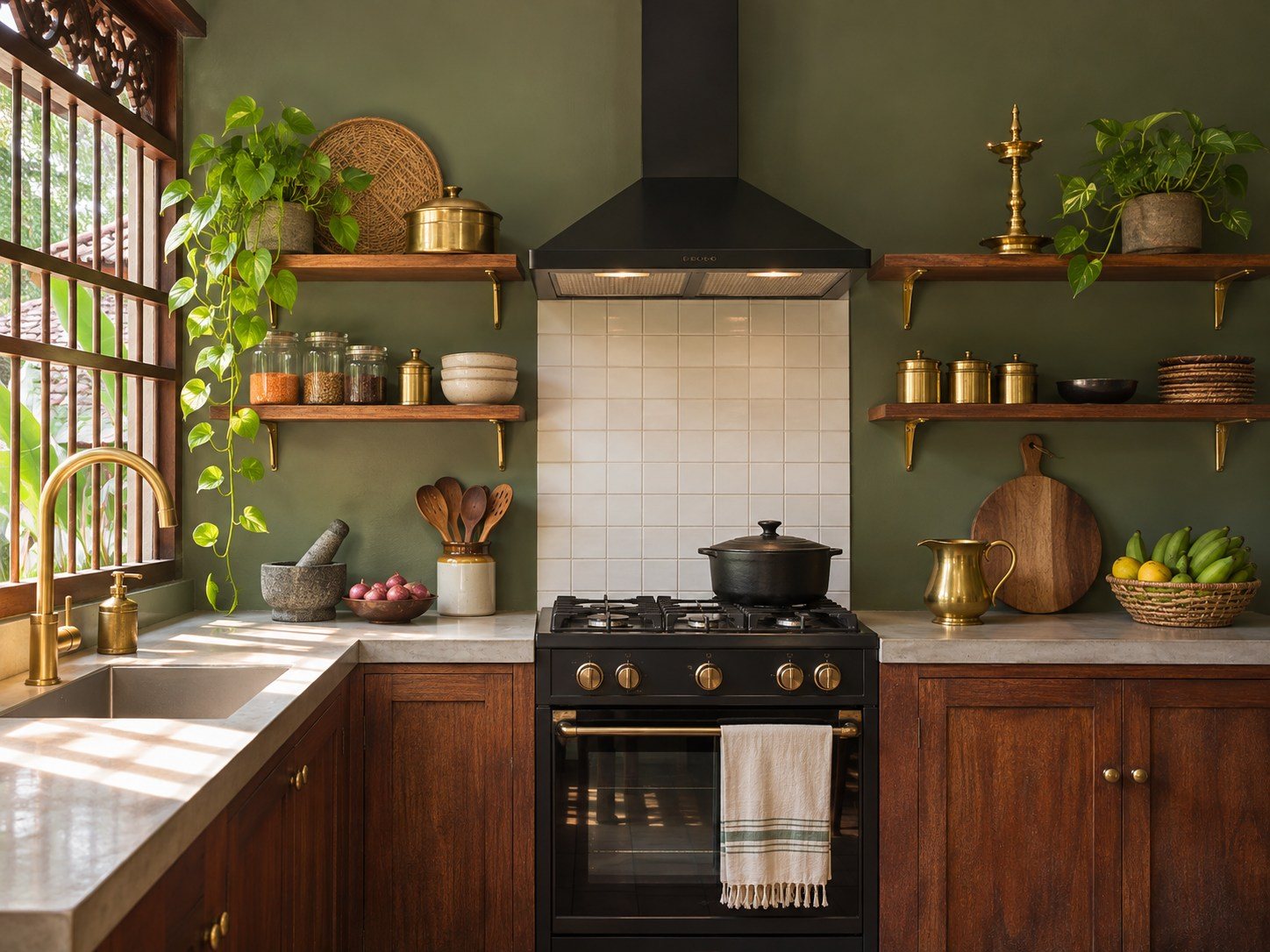
2. Muted sage with white tile
A soft, grey-green sage gives a kitchen depth without making it feel dark. It works particularly well with teak or walnut cabinetry and brass or black fittings. Use a glossy white tile panel at the stove to brighten the cook zone and make oil marks easier to spot and wipe away.
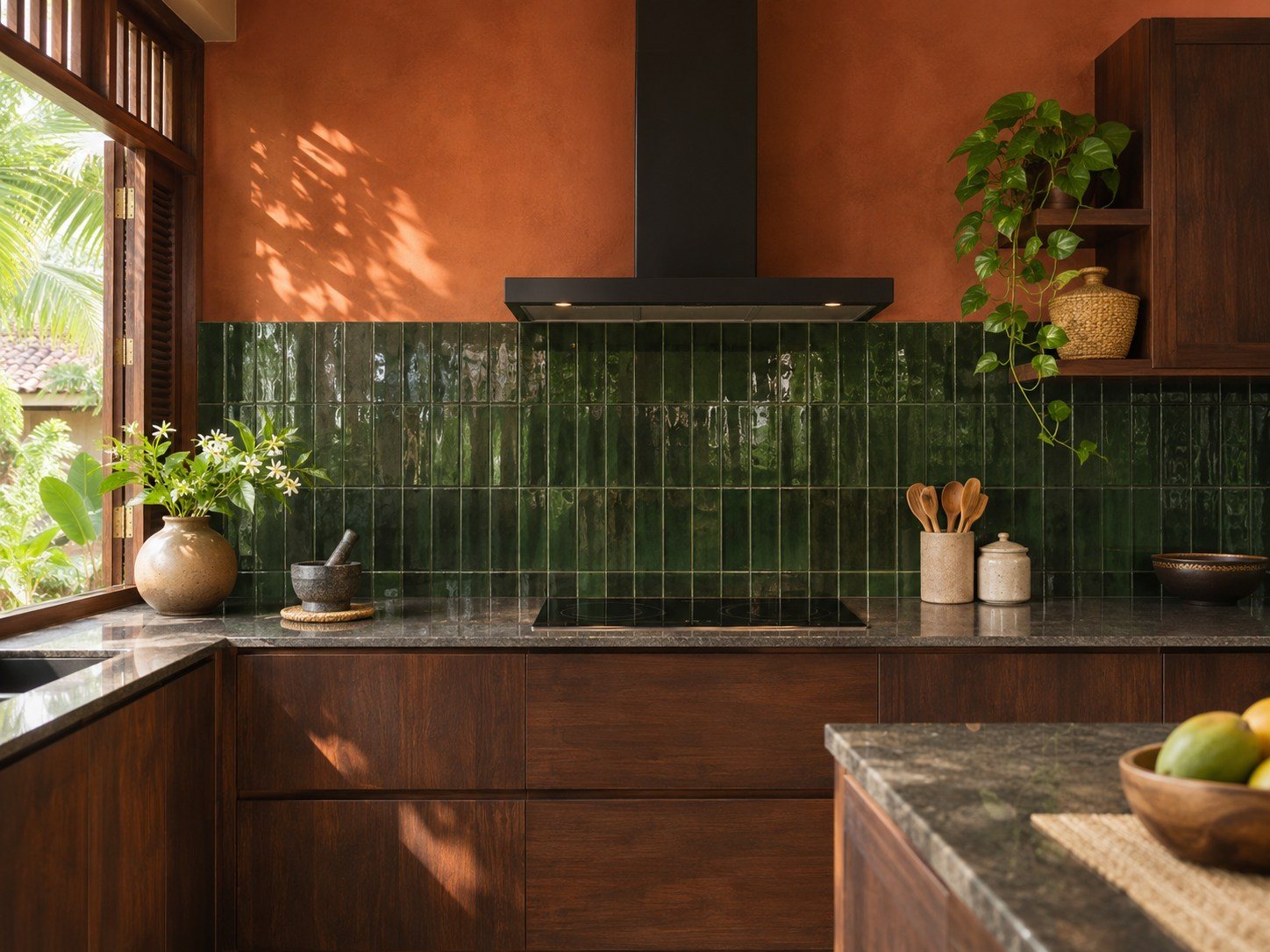
3. Clay terracotta with deep green tile
Terracotta, rust and clay shades bring warmth to a kitchen with natural wood or woven details. Pair a painted clay wall with deep green glazed tiles behind the stove for a richer look. Take samples home first: warm colours can appear much stronger under evening kitchen lighting.
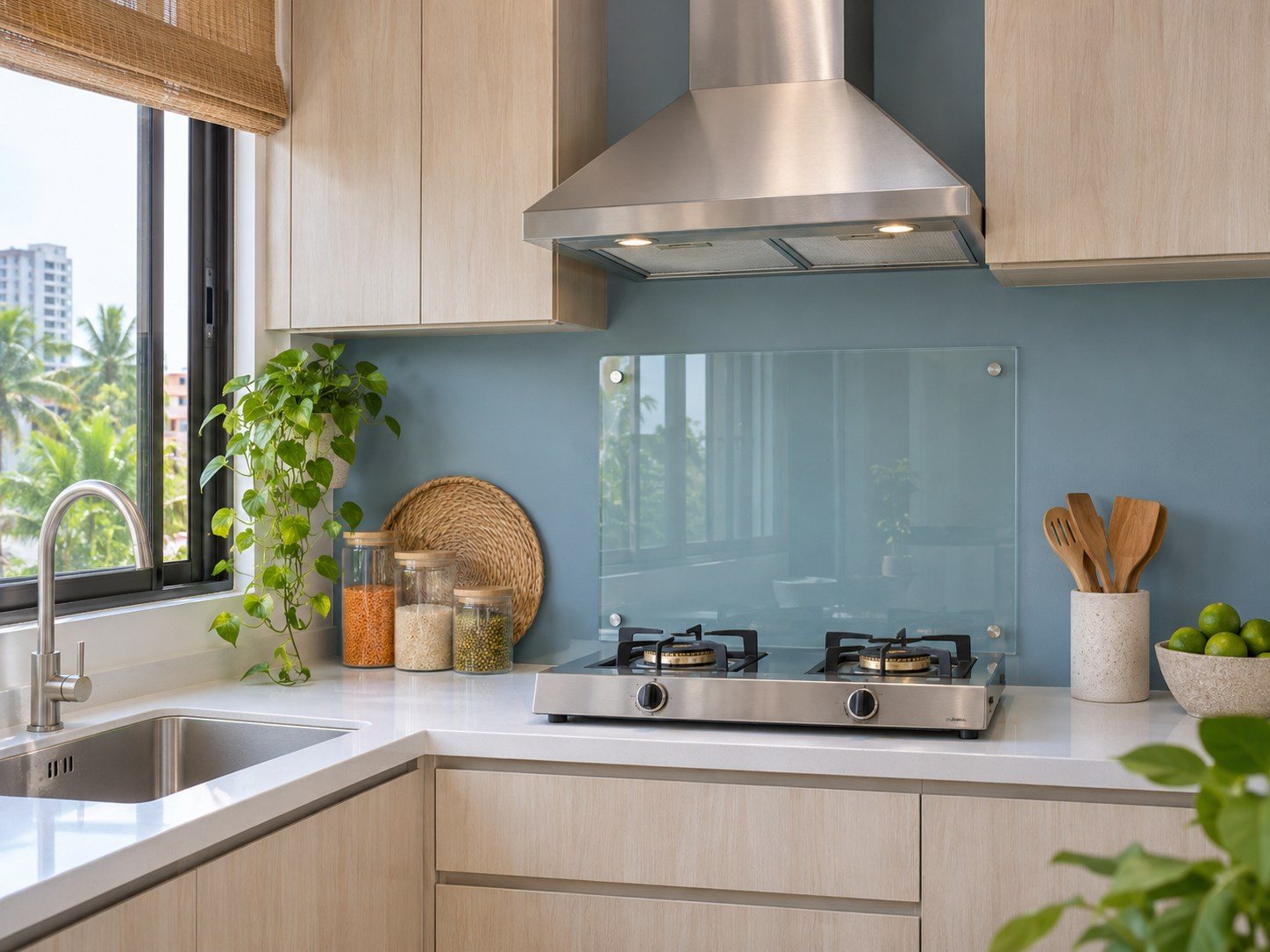
4. Dusty blue and clear glass
Dusty blue is calm, cool and useful in a compact apartment kitchen. A clear tempered-glass splash panel lets the colour show through while protecting the section directly behind the burners. Ask the fabricator about heat suitability, fixing positions and cleaning products before ordering glass.
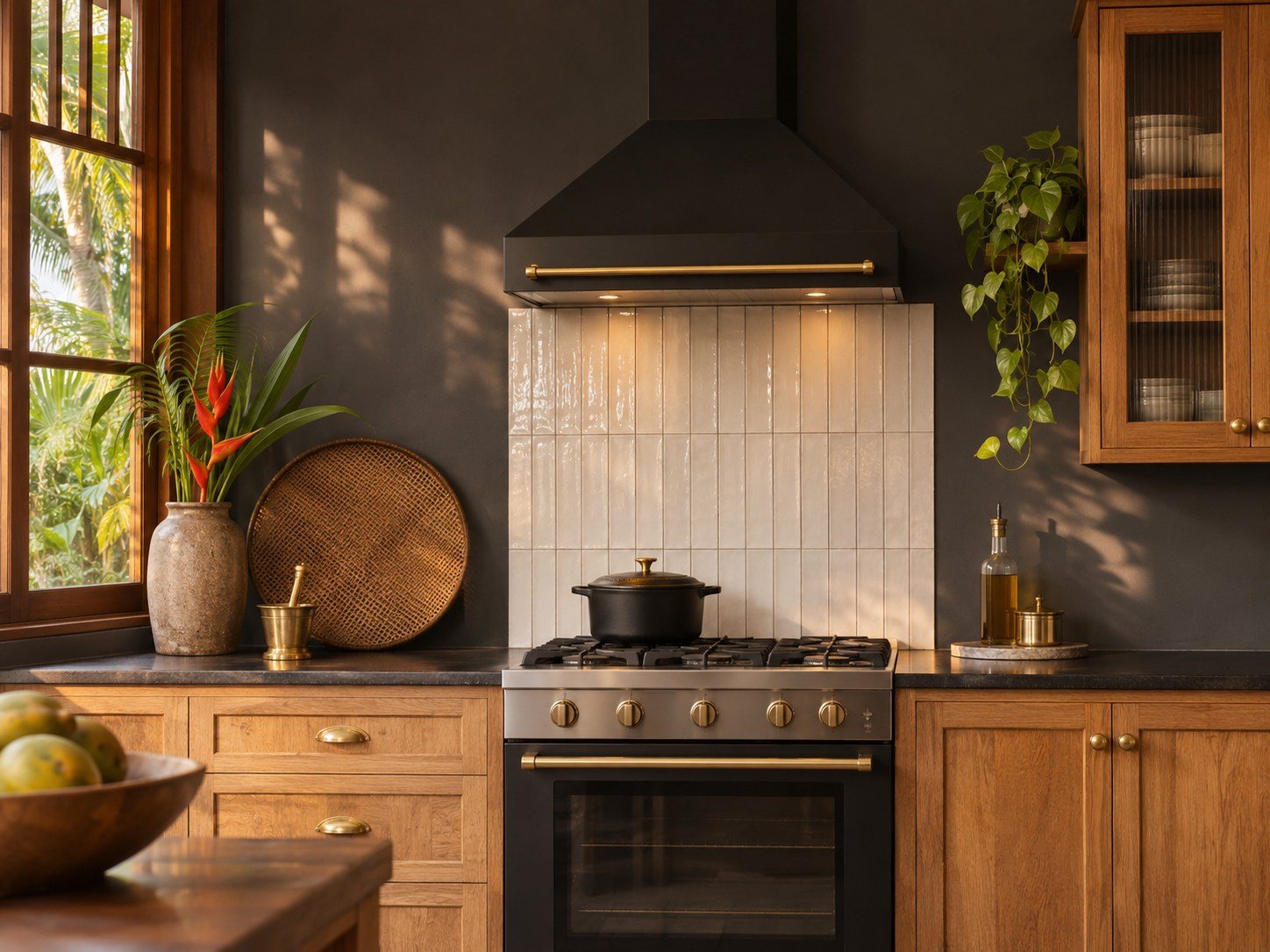
5. Charcoal as a dramatic frame
A charcoal wall can look striking with lighter tiles, oak cabinetry and brass hardware. Use it where the kitchen has enough daylight or layered lighting, and select a mid-sheen washable paint for the wider wall areas. A bright tile panel behind the stove stops the scheme from feeling too heavy.
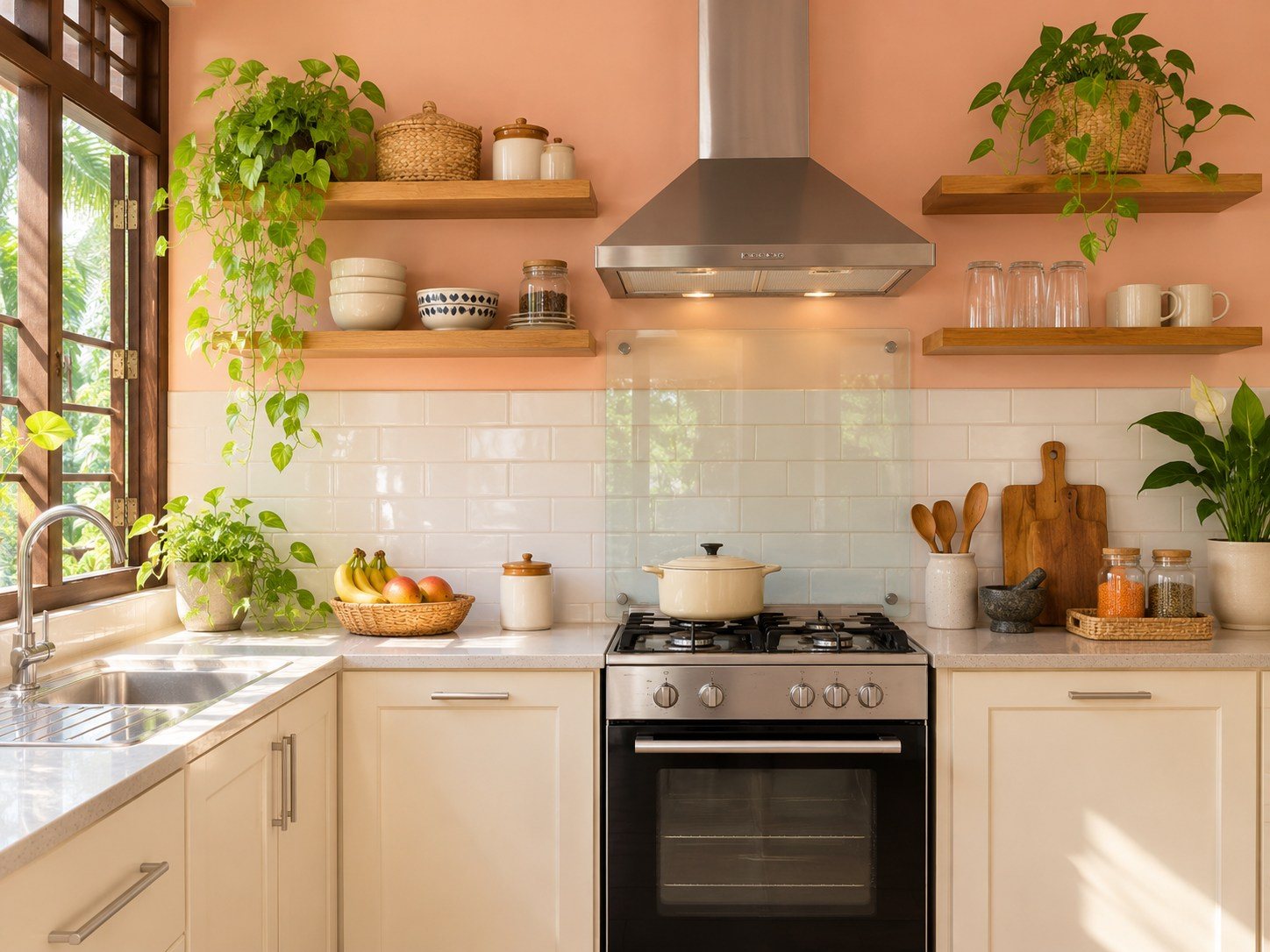
6. Soft peach for a cheerful small kitchen
Soft peach, apricot or blush can make a small kitchen feel welcoming without becoming overpowering. Pair it with cream cabinets and white tile for an airy finish. Keep the shade muted and test it alongside the worktop, since orange undertones can become stronger in afternoon light.
Choose a paint finish that can be cleaned
For the paint outside the protected splash zone, look for an interior paint marketed as washable or with good dirt resistance. Mid-sheen finishes are often easier to wipe than very flat matt paint, although they can reveal uneven plaster more readily. Ask the seller for the product data sheet and follow its advice on primers, drying time and cleaning.
Paint options to ask for in Sri Lanka
Multilac Platinum Omnis Silk Paint is an interior styrene-acrylic paint whose product information lists washability, dirt resistance and microbial protection. It is a sensible option to discuss for the painted areas around, rather than directly in, the stove splash zone. Macksons Supreme Emulsion is another local interior emulsion option to ask a dealer about, particularly if you want a smooth interior finish in a light shade. Always confirm the current colour range and the appropriate primer with the retailer.
For a decorative accent away from direct stove heat, Multilac Platinum Couture is a water-based interior decorative paint designed for patterned finishes. Keep textured decorative paint outside the grease-prone cooking zone: texture is harder to clean than a smooth wall finish.
Preparation and care make the finish last
Clean and repair the wall first
Remove grease, loose paint and dust before any primer or topcoat. A kitchen wall must be fully dry before painting. Repair cracks and allow new plaster to cure according to the paint maker’s instructions. Mask tiles, hood edges and counters so the final lines look deliberate.
Ventilate while you cook
A well-fitted range hood or extractor, plus practical ventilation, reduces the grease and steam settling on nearby walls. Clean hood filters on the schedule in the appliance manual. Good extraction supports the paint and also makes the kitchen more pleasant to use.
Use gentle cleaning methods
Wipe fresh splashes promptly with a soft damp cloth and mild detergent where the paint label permits it. Avoid abrasive pads and harsh solvents, which can dull the finish or leave shiny patches. Test a cleaner in an inconspicuous area first.
Final checklist
Choose the colour after you decide where the splashback begins. Confirm clearance and heat requirements for your specific cooker. Use a smooth, washable paint for the wider wall, and reserve the high-splash zone for a finish designed to be cleaned repeatedly. With that balance, the stove wall can become a feature without turning into the hardest surface in the kitchen to maintain.
Was this helpful?
Thanks for your feedback!
Sorry, that did not go through. Please try again.