
How to Choose Curtains for Sri Lanka’s Tropical Climate
· 8 min read

Curtains do more than finish a room. In Sri Lanka’s bright, warm climate, they help shape daylight, privacy and the way a room feels throughout the day. The right choice depends on the direction of the window, the room’s use, how often the fabric can be washed, and whether the opening needs to stay airy.
Rather than choosing every curtain at once, start with the windows that receive the strongest sun or need the most privacy. Measure carefully, compare samples in your own light and check how each fabric should be cleaned. These practical ideas will help you choose curtains that suit apartments, family homes and tropical verandahs.
Start with light, privacy and comfort
1. Notice the sun before choosing a fabric
Observe when direct sun reaches each window and how the room feels at different times. A west-facing room may need stronger afternoon light control, while a shaded window may benefit from a light sheer that preserves brightness.
2. Decide what each room needs
List the main goal for every window: privacy, softer daylight, sleep, reduced glare or a decorative frame. One fabric rarely does everything equally well, so matching the treatment to the room makes the choice easier.
3. Use sheers where daylight matters
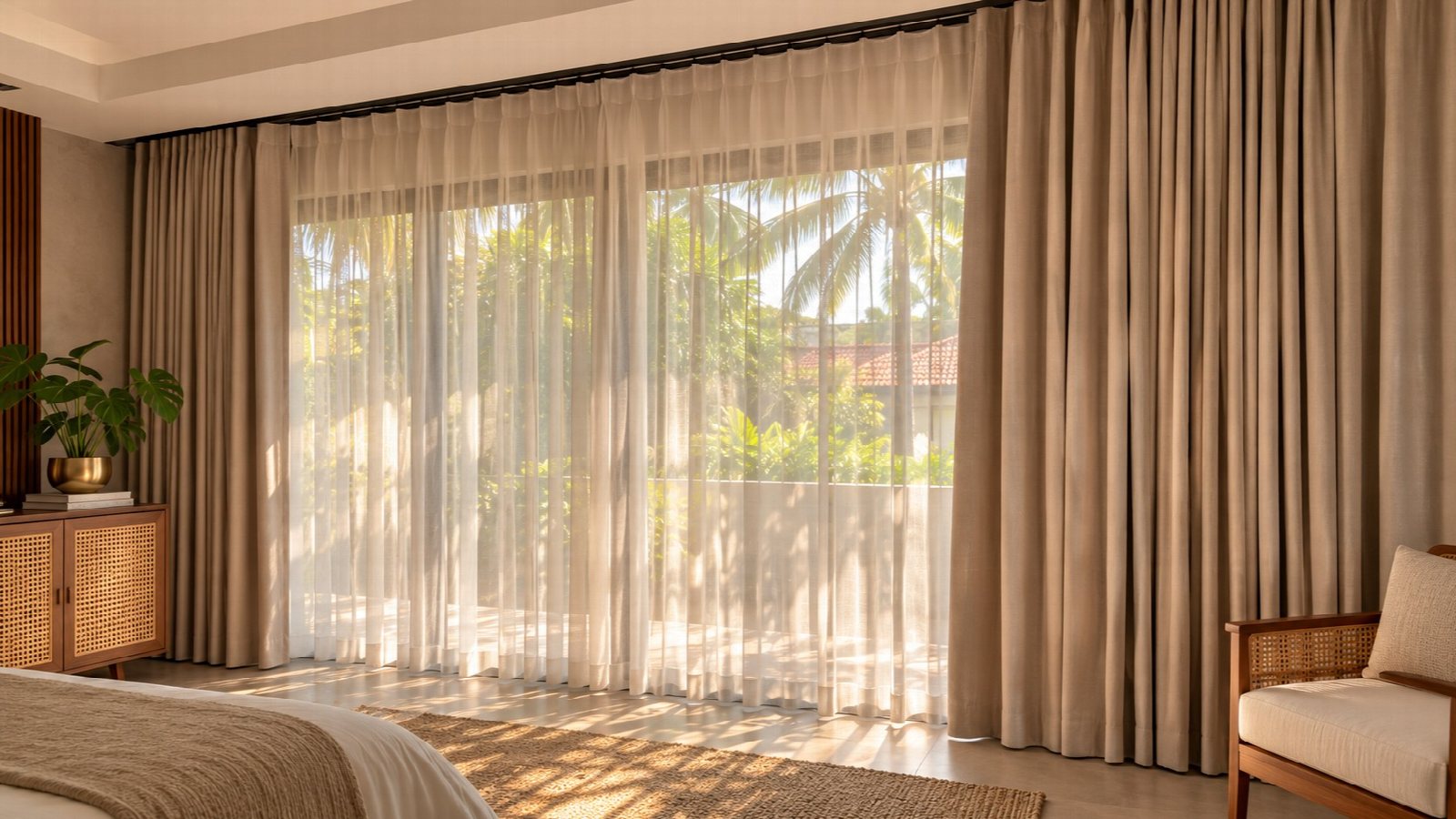
A sheer curtain softens the view and diffuses bright light while keeping a room open and airy. It offers limited privacy at night when lights are on, so pair it with another layer where needed.
4. Consider lining for sun-exposed rooms
A quality lining can help protect furnishings from strong sunlight and improve light blocking. It adds weight and may take longer to dry, so choose it where the extra coverage is useful.
5. Choose room-darkening for sleeping areas
For bedrooms, lined curtains or blackout fabrics can reduce unwanted early light and street glow. Check how the edges meet the wall; narrow gaps can still let light in around the sides.

6. Layer two treatments for flexibility
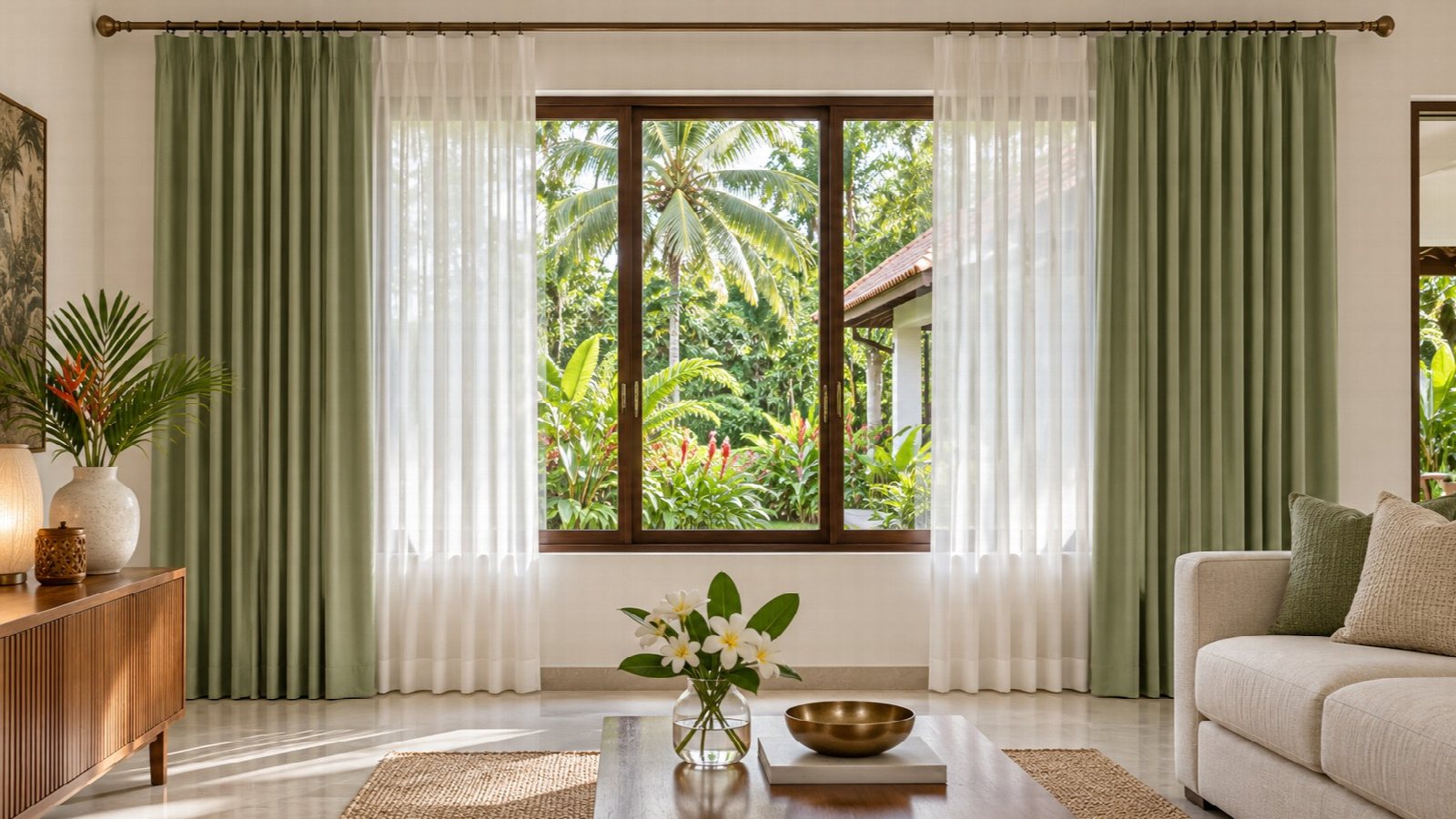
Pair sheers with heavier side curtains on a double track. During the day, draw the sheers to soften daylight; in the evening, close the outer panels for more privacy.
Choose fabric for tropical living
7. Compare fabric weights in person
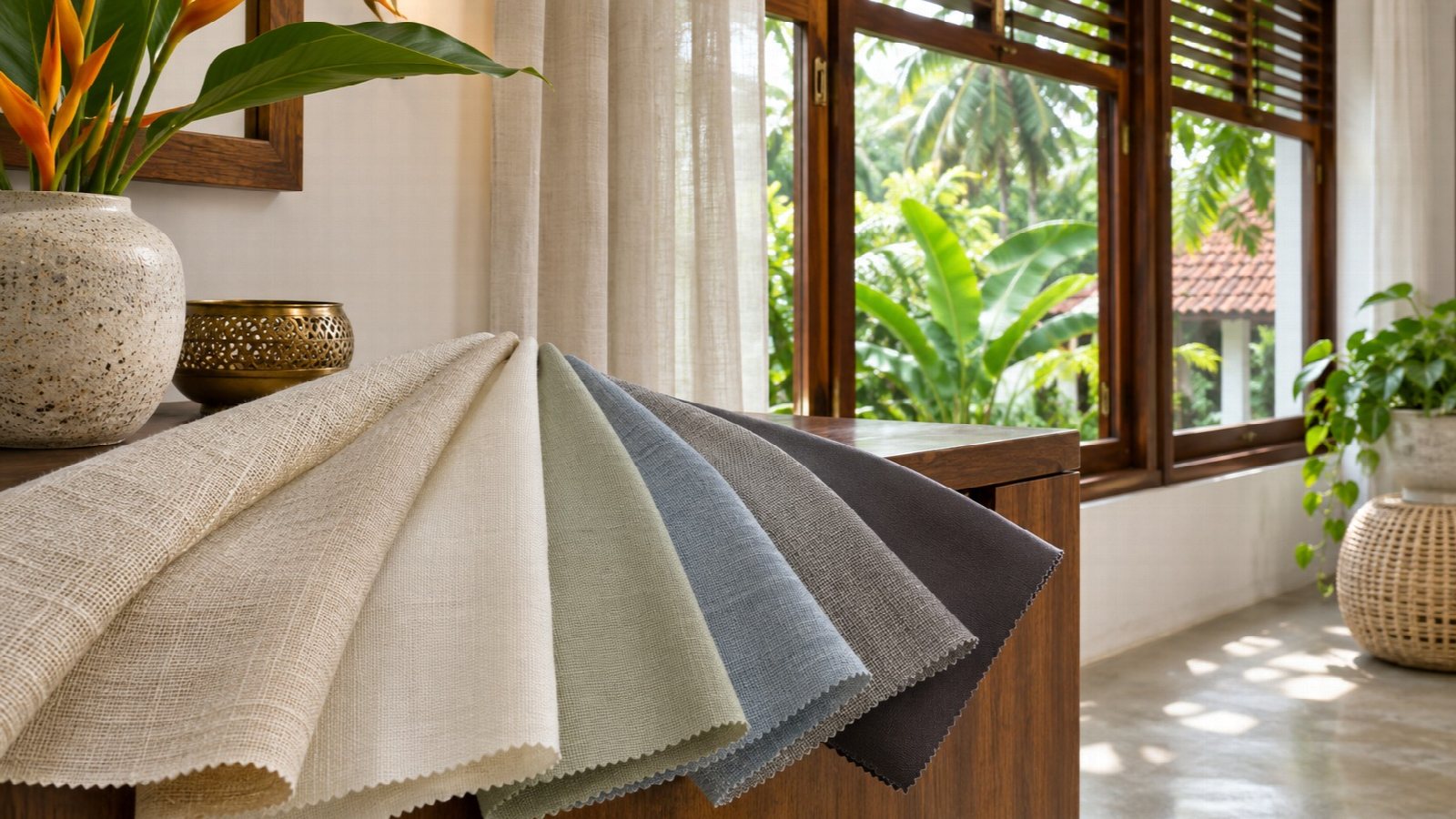
Hold fabric samples against the actual window and view them in morning and afternoon light. Heavy cloth drapes differently from light blends and may need a sturdier track, especially across wide openings.
8. Pick a fabric that suits the room
Cotton blends, polyester blends and linen-look fabrics each behave differently. Look at the care label, colourfastness guidance and recommended washing method, rather than choosing by appearance alone.
9. Think about humidity and drying time
In humid weather, curtains need to dry fully after washing. Choose washable fabric where dust or cooking smells are likely, and make sure you have room to air or line-dry panels before rehanging.
10. Choose colour in the room’s light
A colour sample can look different in tropical daylight and under warm evening lamps. Compare it beside the wall paint, flooring and upholstery, and remember that pale fabric may show marks more readily.
11. Use pattern with scale in mind
Large prints can make a small room feel busy, while a subtle texture adds interest without dominating. If the room already has patterned cushions or rugs, a quieter curtain can help the overall palette settle.
12. Check for practical safety needs
If children or pets use the room, consider cordless operation and keep cords secured out of reach. Avoid fabrics that trail across heaters, cooktops or doorways, and make sure tracks are firmly fixed.
Measure and hang them well
13. Measure the window and surrounding wall
Record the frame width, height, ceiling line and nearby furniture. Curtains usually look more generous when the track extends beyond the frame, letting panels stack clear of the glass when open.
14. Hang curtains high and wide
Mounting the track near the ceiling and wider than the window can create a taller, broader look. Check for beams, air-conditioning units and curtain boxes before deciding exactly where it can be fixed.

15. Choose a track or rod for the load
A light sheer and a lined pair place different demands on hardware. Wide doors or heavy panels may need a centre support or ceiling track rated for the weight; follow the installer’s fixing advice.
16. Get the length right
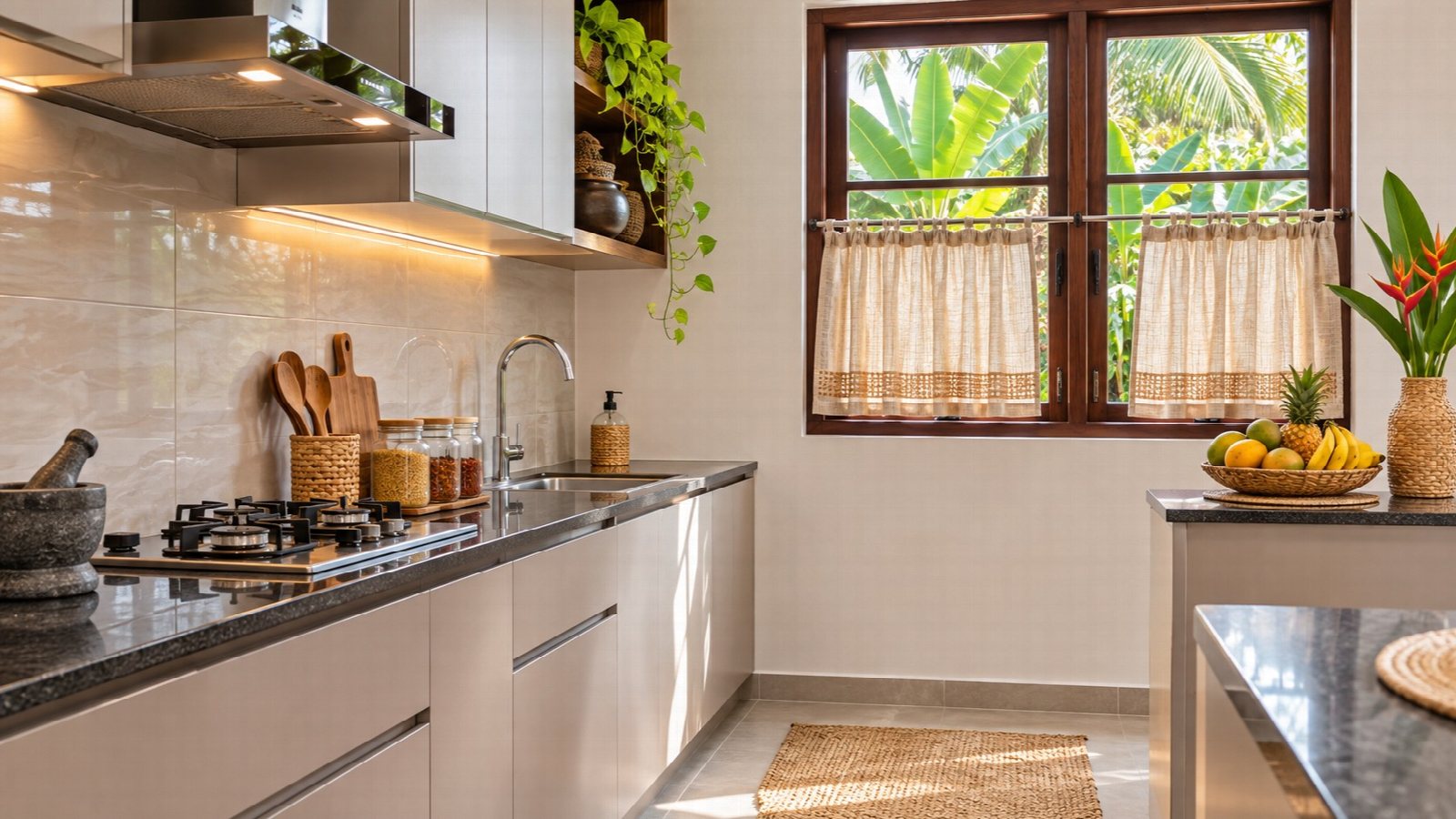
Floor-length curtains suit many living and dining rooms, but they should not drag where dust, moisture or children are concerns. In kitchens and bathrooms, a shorter length can be easier to clean and safer.
17. Allow enough fullness
Panels need extra width to form relaxed folds when closed. Ask the supplier how much fullness the fabric needs, and make sure the stack-back space will not cover too much of the glass when open.
18. Dress broad sliding doors as one opening
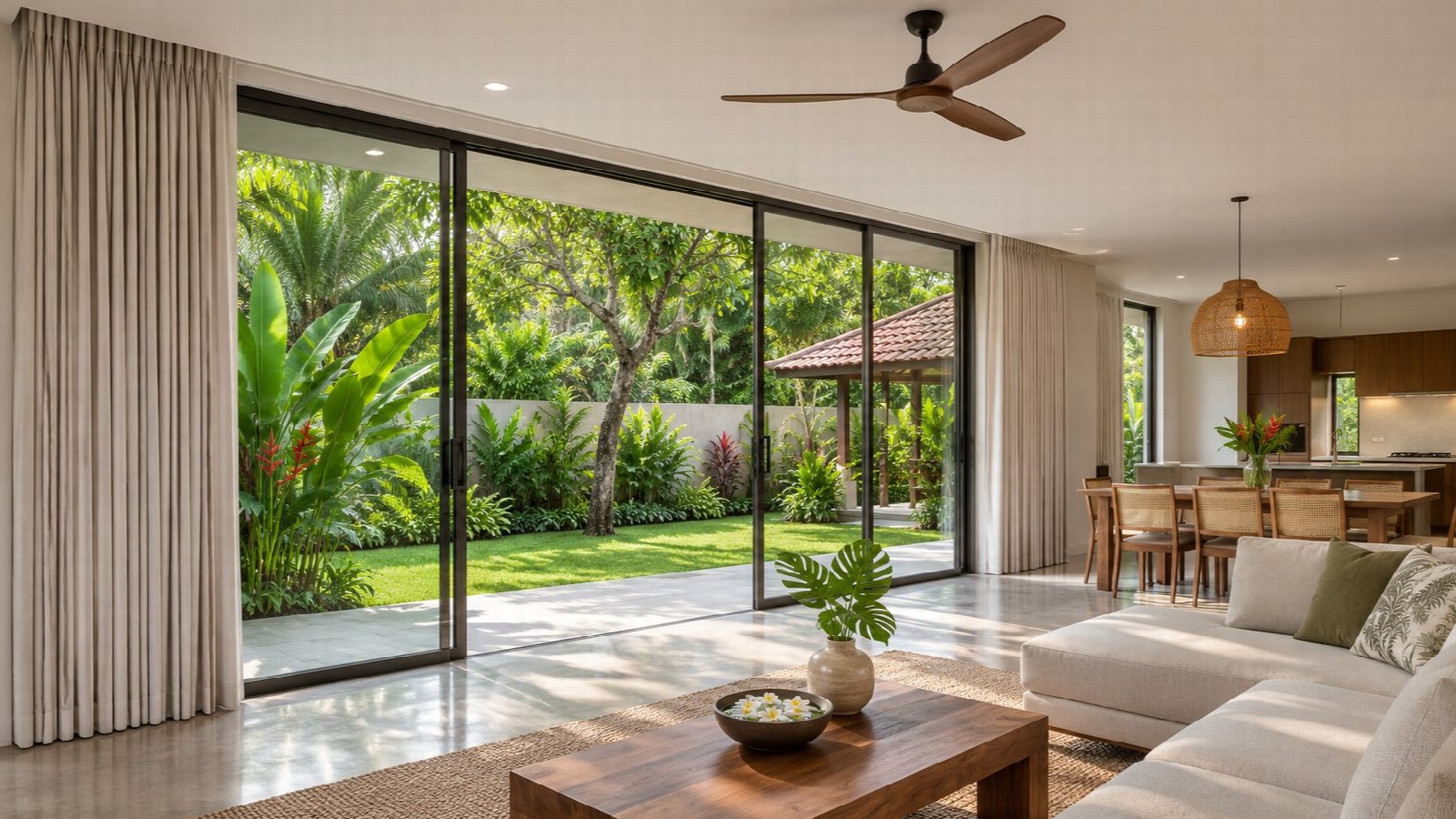
A continuous track across sliding doors can make a large opening feel cohesive. Keep the curtain stack clear of handles and the door’s movement, and use a split opening if people pass through often.
Find the right curtain for each room
19. Choose an easy-care kitchen option
Kitchen curtains can collect grease and cooking odours. Use a washable fabric, fit it away from flames and splashes, and avoid long panels that can brush a counter or cooking area.
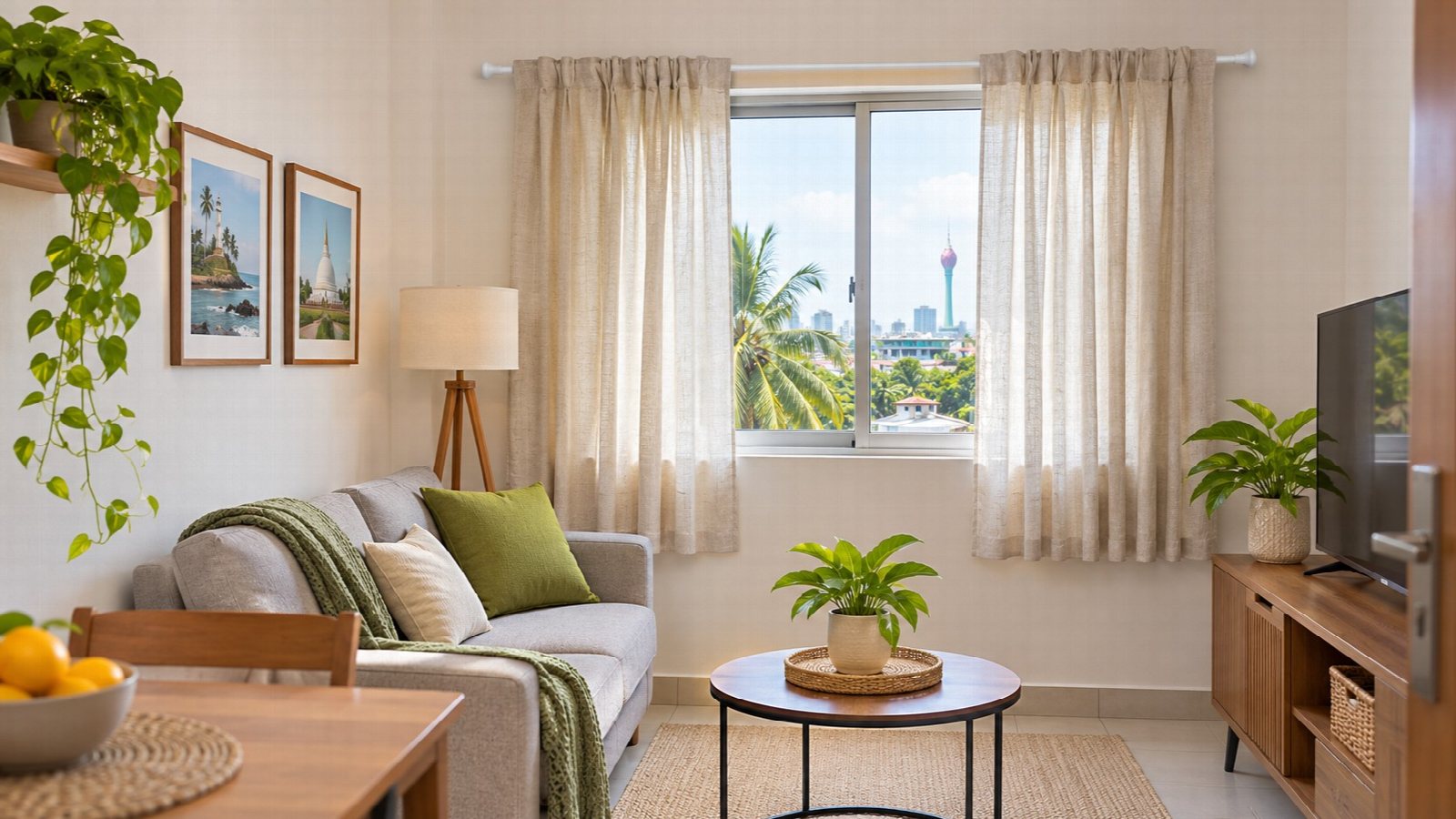
20. Make a rental window feel finished
Where drilling is restricted, a tension rod or approved removable hardware may work for a light panel. Check the product’s weight limit and avoid relying on it for heavy lined curtains.
21. Shade a covered verandah appropriately
For an exposed verandah, choose a shade made for outdoor use and secure it against wind. Indoor curtains may fade or mildew outdoors, so check material care and bring removable panels inside during heavy rain.

22. Use curtains to soften a work area
A light-filtering curtain can reduce screen glare in a home office without making the room gloomy. Test it during working hours and keep it away from equipment vents and desk lamps.
Care and finishing touches
23. Wash and dry curtains as directed
Check the care label before washing; some fabrics shrink, lose their finish or need professional cleaning. Remove dust regularly and let panels dry completely before putting them back up.
24. Keep airflow in mind
Curtains can soften heat and glare, but they should not block ventilation or air-conditioning returns. Leave windows and vents usable, and draw curtains strategically during the brightest hours.
25. Finish with simple hardware and tidy folds
Match rod or track finishes to the room’s other metal details, then steam or press panels according to their care instructions. Neat hems and even folds often make an affordable fabric look more considered.
A simple way to make your choice
For each window, write down the amount of sun it receives, the privacy you need and the time you can give to cleaning. Decide whether a single panel, a sheer and drape combination, or a shade is the best fit. Then measure and ask a supplier or installer about fabric care, lining, hardware strength and lead time before placing an order.
Keep a consistent colour family across adjoining rooms, but choose different levels of coverage where the windows have different jobs. This gives the home a calm, connected look while letting bedrooms, kitchens and living areas work in their own way.
Before ordering, confirm what is included in the quoted price: fabric, lining, track or rod, stitching, installation and any delivery charge. Ask to see a sample of the actual fabric and check whether the colour can vary between batches. If the supplier offers measuring, arrange it after major flooring or ceiling work is complete so the finished height is accurate.
For broad windows, ask how many panels are needed and where they will stack when open. A wide curtain can look skimpy if there is too little fabric, but excessive fullness can crowd a narrow room. Discuss centre supports and fixing points for long tracks, and make sure the curtain can be removed for washing without dismantling the whole fitting.
For strong afternoon sun, observe the room for several days before settling on a lining. A lighter layer may be enough if you want to preserve the view and breeze; a lined outer curtain gives more control when glare or fading is a concern. Keep some way to draw panels aside fully, so daylight and ventilation remain available when the sun is less intense.
Comfortable windows for tropical living
The best curtains balance filtered daylight, useful privacy and easy care. With thoughtful fabric choices and accurate measurements, even simple panels can make a Sri Lankan home feel cooler, softer and more complete.
Take a final photo of each window with its measurements and notes. It helps compare samples later and gives an installer a clear reference for the track position, wall clearance and preferred opening direction.
Was this helpful?
Thanks for your feedback!
Sorry, that did not go through. Please try again.